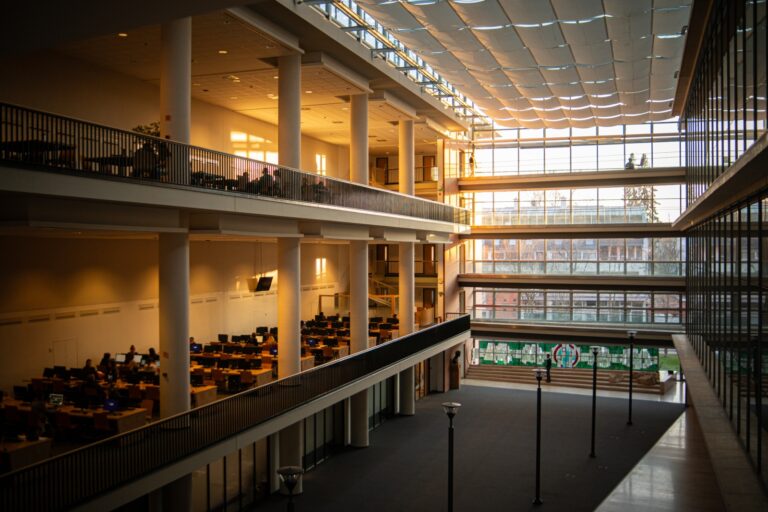

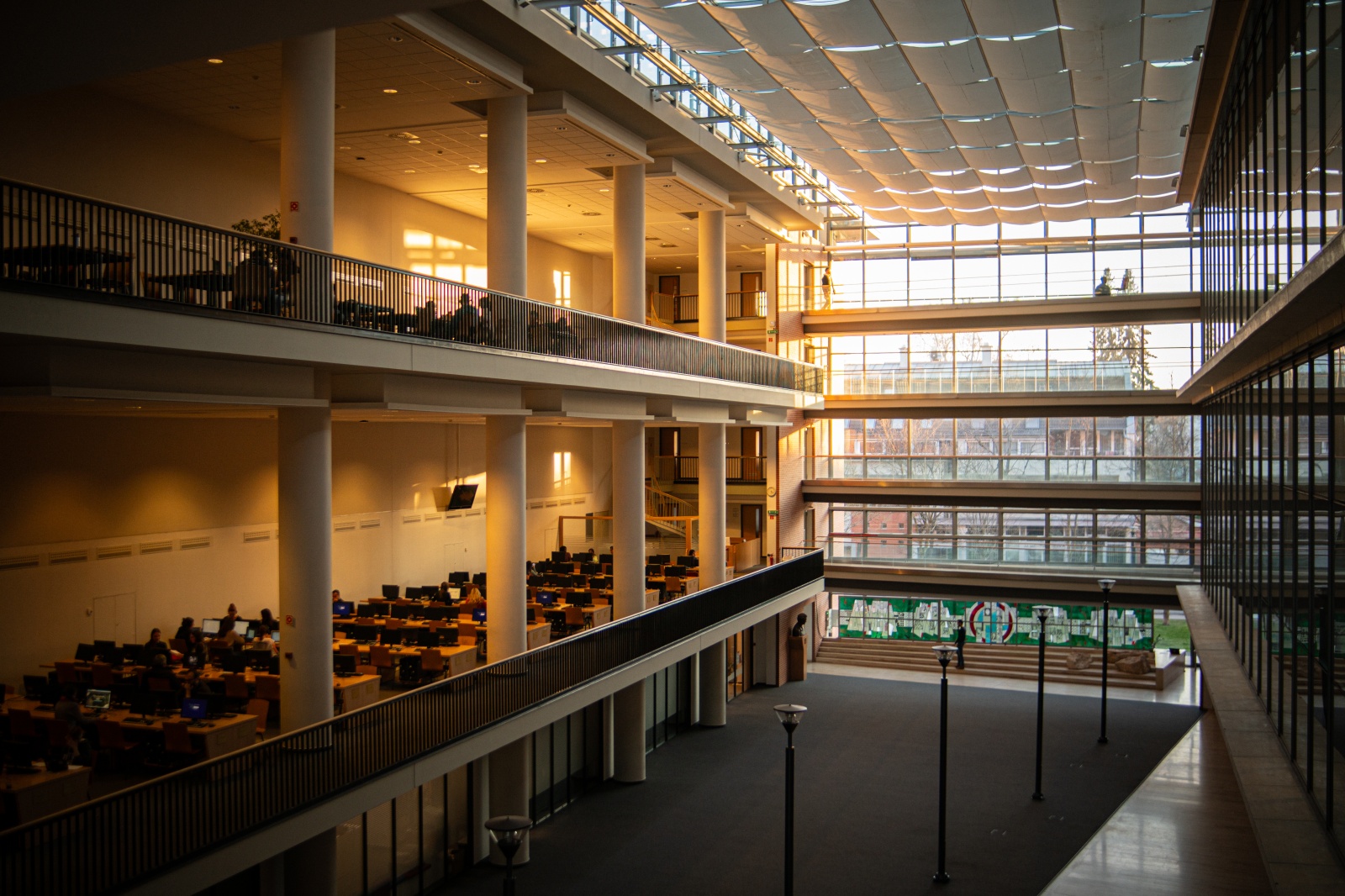

Students arriving to study for exams at the University of Szeged’s József Attila Study and Information Center on December 4 were met not with silence, but with a loud children’s program—according to a viral video posted by an international student that racked up more than 86,000 views and 11,000 reactions on TikTok in just a few days.
In the footage, the student opens the door to the library on an upper floor, revealing a large crowd gathered on the ground level. Although the library is soundproofed, loud music can still be heard through the closed doors. “So much for keeping quiet in the library,” the uploader wrote in English, objecting to the event because the university’s exam period begins on the 15th, with some students sitting exams even earlier.
The video quickly drew a flood of comments. Some viewers said the event disturbed them; others argued that the building had never been a suitable place to study. In response, the creator posted a follow-up video explaining that only later did they realize the building houses not just a library but also functions as an events center. Even so, they questioned why loud programs were held in a space whose defining purpose is quiet. At that point, they added, one might as well study in a café—where peace and quiet are hardly guaranteed.
Contacted by Szegeder, the uploader—who asked to remain anonymous—said others were also bothered by the event, though not by the crowd itself but by the music. The first-year medical student studies in the university’s main library four or five times a week and had noticed similar events before, but said none had been this loud.
Asked whether students had received any advance warning about the event, the student said they did not know—and noted that they do not speak Hungarian, so even if the university had posted notices, they would not have been able to read them.
We contacted the SZTE Klebelsberg Library, which responded by emphasizing that the building “is a multifunctional institution where, from time to time, not only library activities but other types of university events are held.” Visitors, they said, are informed in advance about expected conditions through on-site informational materials and announcements posted on social media.
The university’s press office told Szegeder that the event shown in the video was the SZTE Alma Mater Santa celebration, an annual program inviting former students and university staff to attend with their children. Participation was free. As they wrote, “Since December 2006, the university has welcomed alumni and their children back each year for a shared celebration and Santa-waiting event organized by the SZTE Alma Mater Office.”
According to the university, the program ran from 4:30 p.m. to 6:30 p.m. and included a 40-minute musical segment performed by a two-member band. They stressed that “the event was not held in the library itself, but in the Atrium of the József Attila Study and Information Center,” given the several hundred participants.
Now in its 19th year, the event has occasionally prompted complaints on site. Past experience, the university said, suggests that “most students understand and accept it—and often even join in and enjoy the event,” taking selfies with Santa and posting about it on social media.
Asked whether students were notified in advance, officials said that due to earlier feedback they send an annual notice to the directorate of the Klebelsberg Library and Archives, asking them to flag potential disturbances and inform students—“which they do both in person and online.” Library notices are available in both Hungarian and English, meaning, in theory, that the TikTok video’s creator could have been informed about the event. The university added that the soundproof reading rooms provide opportunities for uninterrupted study even during such programs.
They expressed regret if anyone nonetheless found the situation difficult, while noting that “this is a 19-year-old tradition whose merits extend beyond shared celebration and cannot be overstated.”
Anna Farkas